
 By
By 
The traditional image of higher education involves a professor lecturing from a podium while students frantically take notes in a tiered auditorium. While theoretical foundations remain essential, the modern workforce demands more than a degree; it requires demonstrated capability. Today, forward-thinking colleges and universities are fundamentally shifting their educational models to bridge the gap between academic theory and practical application.
By integrating experiential learning into the core curriculum, institutions ensure that graduates do not just enter the job market with a portfolio of grades, but with a track record of real-world accomplishments. This comprehensive approach to higher education transforms students from passive consumers of information into active creators, problem solvers, and industry leaders.
The Evolution of Experiential Learning in Higher Education
Experiential learning is grounded in the philosophy that knowledge is created through the transformation of experience. In the past, practical application was often treated as an optional, late-stage addition to a student’s education, usually occurring during the final semester of senior year. Today, colleges embed these opportunities from day one.
The integration of hands-on learning serves several critical functions:
-
Enhanced Retention: Students retain concepts far better when they immediately apply them to solve actual puzzles or dilemmas.
-
Skill Verification: Employers no longer rely solely on a GPA to gauge a candidate’s potential. They look for tangible proof of technical proficiency and soft skills.
-
Career Clarity: Engaging in real-world scenarios early helps students confirm their chosen career path or pivot before investing years into a field that suits them poorly.
Cooperative Education and Immersive Internships
The most direct route to real-world experience is through cooperative education (co-op) programs and structured internships. While internships are often part-time or limited to summer breaks, co-op programs represent a deeper institutional commitment to experiential learning.
In a formalized co-op framework, universities partner with corporations, non-profits, and government agencies. Students alternate semesters of academic study with semesters of full-time, paid employment relevant to their major. This structure allows students to spend six months or more embedded within an organization, taking on significant responsibilities that go far beyond basic administrative tasks.
These partnerships provide a dual benefit. Students gain direct exposure to industry standards, cutting-edge software, and corporate cultures. Simultaneously, employers secure a pipeline of vetted talent, often extending full-time job offers to successful co-op students long before graduation day arrives.
Campus-Based Research and Innovation Hubs
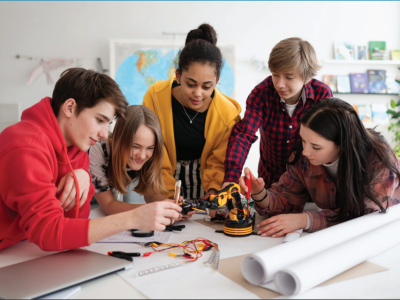
Not all real-world learning requires students to leave campus. Universities are increasingly investing in sophisticated innovation hubs, maker spaces, and incubator labs that mirror the environments of top-tier research firms and startup companies.
Within these hubs, undergraduates work alongside faculty members on groundbreaking research, often funded by federal grants or private sector sponsorships. Whether developing sustainable building materials, coding artificial intelligence algorithms, or conducting clinical trials, students learn to navigate the trial-and-error nature of scientific and sociological inquiry. These environments teach students how to manage budgets, handle delicate instrumentation, and publish findings in peer-reviewed journals.
Client-Based Capstone Projects
A defining feature of modern senior-year curricula across disciplines—ranging from engineering to business marketing—is the client-based capstone project. Instead of writing a theoretical thesis, students form interdisciplinary teams to tackle a specific, unresolved problem faced by an actual external organization.
A local business or global enterprise presents a challenge to the class, such as optimizing a supply chain, rebranding a product line, or designing a community park. Over the course of one or two semesters, students act as external consultants. They conduct market research, perform data analysis, build prototypes, and present their final recommendations to executive boards. The stakes are genuinely high, as the host organizations frequently implement the solutions devised by the students.
Service Learning and Community Engagement
Real-world learning extends beyond corporate boardroom environments. Service learning combines academic instruction with meaningful community service, encouraging civic responsibility while teaching vital professional skills.
Through service learning, a sociology student might assist a city agency in conducting a census of unhoused populations to improve resource distribution. An accounting major might volunteer at a community center to help low-income residents navigate complex tax filings. These experiences force students to confront messy, systemic, systemic societal challenges that cannot be neatly summarized in a textbook chapter, fostering empathy, adaptability, and cross-cultural communication.
Student-Run Ventures and Simulated Environments
To replicate the pressure and fast-paced dynamics of specific industries, universities have established student-run operations and advanced simulation labs. These platforms provide a safe environment to fail, learn, and iterate without catastrophic real-world financial or physical consequences.
Examples of these environments include:
-
Student-Managed Investment Funds: Business schools frequently allocate millions of dollars from the university endowment for students to invest. Students analyze market trends, pitch equities, and manage risk, bearing direct responsibility for the fund’s financial performance.
-
High-Fidelity Medical Simulation Labs: Nursing and pre-medical programs utilize advanced, responsive mannequins and simulated hospital wards. Students practice diagnosing conditions, administering treatment, and managing medical emergencies in real time.
-
Student Publications and Agencies: Communications departments often host fully functional public relations, advertising, or news agencies. Students pitch to local clients, manage digital campaigns, and run daily newsrooms.
Global Study and International Consultancies
In an interconnected economy, the real world is global. Colleges are reshaping traditional study abroad programs to emphasize professional immersion over simple cultural tourism.
Modern global study initiatives often include international internships, global consulting projects, and field-based research in developing economies. Students might spend a semester in an emerging market helping a microfinance institution scale its operations, or working with an international non-governmental organization to design clean water infrastructure. These experiences challenge students to navigate language barriers, distinct regulatory frameworks, and diverse workplace norms, preparing them for careers in multinational organizations.
Frequently Asked Questions
How do universities ensure that internships provide educational value rather than just menial tasks?
Colleges utilize dedicated career services staff and faculty advisors who vet employer partners before approving internships for academic credit. Learning agreements are established outlining specific project goals, required skills, and mentorship expectations. Students are typically required to submit reflections and portfolios that are evaluated by faculty to guarantee academic rigor.
Can students in liberal arts majors benefit from real-world learning experiences?
Yes. Liberal arts programs heavily integrate real-world learning through archives management, digital humanities projects, policy drafting for local think tanks, and community-based oral history documentation. These projects allow students to apply critical thinking, narrative construction, and analytical skills to tangible cultural and civic initiatives.
How do experiential learning programs accommodate students who must work to pay for tuition?
Many institutions prioritize paid cooperative education experiences and paid internships to ensure accessibility. Additionally, universities offer grants, stipends, and fellowships specifically designed to cover living expenses for students undertaking unpaid public service or research roles, ensuring financial constraints do not limit opportunity.
What role do alumni play in facilitating these real-world learning opportunities?
Alumni serve as a vital bridge between academia and industry. They frequently return to campus to mentor students, judge capstone competitions, provide data sets from their companies for classroom use, and champion hiring initiatives within their organizations to secure internship and co-op slots for students from their alma mater.
How does participation in real-world learning impact a student’s timeline to graduation?
While standard internship and capstone models fit neatly within a traditional four-year schedule, formalized co-op programs can extend graduation timelines to five years. However, during that period, students gain up to two years of full-time professional experience, meaning they graduate with an advanced resume and a significantly lower need for entry-level training.
Are freshman and sophomore students eligible to participate in these practical experiences?
Many universities have introduced introductory experiential components, such as first-year design challenges, job shadowing programs, and undergraduate research fellowships specifically reserved for lowerclassmen. This early exposure helps build foundational skills and prepares students for higher-stakes internships and capstone projects later in their academic careers.








Comments